Samoan Tattoo Meaning
Thinking about a Samoan tattoo? You are wondering about all that deep meaning, right? Good. You came to the right place. These are not just cool designs; they tell stories about family, heritage, and who you are. Seriously, it is more than just pretty ink.
The Roots of Samoan Tattoos: A Living Canvas
When you look at a Samoan tattoo, you see history. Polynesian cultures, especially Samoan, have some of the most amazing tattoo traditions. We call it pe’a for men and malu for women. These are not little stick-on things; they are full body art.
The practice goes back thousands of years. Early explorers, like Captain Cook, wrote about these incredible markings. Imagine, people getting these done with traditional tools, bone, wood, and a mallet. Ouch. Talk about commitment to your art.
Traditional Tools and Techniques: Seriously Primitive, Seriously Painful
So, how did they do it, way back when? No tattoo gun, that is for sure. They used hand-tapping. A craftsman, called a tufuga ta tatau, carefully tapped ink into the skin.
- The tools: They crafted tools from bone, turtle shell, or wood. These were shaped like combs with needles at the end.
- The ink: The ink came from soot, usually from burnt candlenut shells, mixed with water. This made a dark, rich black.
- The process: The tufuga would tap the tool with a small mallet, driving the needles and ink into your skin. It was not a quick thing. Sometimes it took weeks or even months to complete a full pe’a. I do not even want to think about the pain. My one wrist tattoo hurt enough.
This method truly tests your endurance. It was a rite of passage for many, not just pretty pictures. It showed strength and dedication.
Beyond the Skin: Cultural Significance of Tatau
A Samoan tattoo carries huge cultural weight. It connects you to your ancestors, your community, and your identity. It is not something you get on a whim after a few too many drinks. People took it seriously. Very seriously.
For men, the pe’a covers their body from the waist to the knees. It symbolizes strength, courage, and leadership. For women, the malu covers their thighs and sometimes their hands. It represents beauty, grace, and service to their family.
Getting tattooed was a big deal. The whole village might celebrate. It was a communal event, not just a personal choice. People still respect this tradition very much.
Rites of Passage: Stepping into Adulthood
For many Samoans, receiving a tatau marked a significant life stage. It was a visible sign of maturity and readiness to take on adult responsibilities. Imagine having a tattoo that literally broadcasts your life stage to everyone around you.
The pain endured during the tattooing process was part of the ritual. It showed your ability to handle hardship. It proved your worthiness for the designs you carried. You really earned that artwork.
Common Samoan Tattoo Symbols and Their Meanings
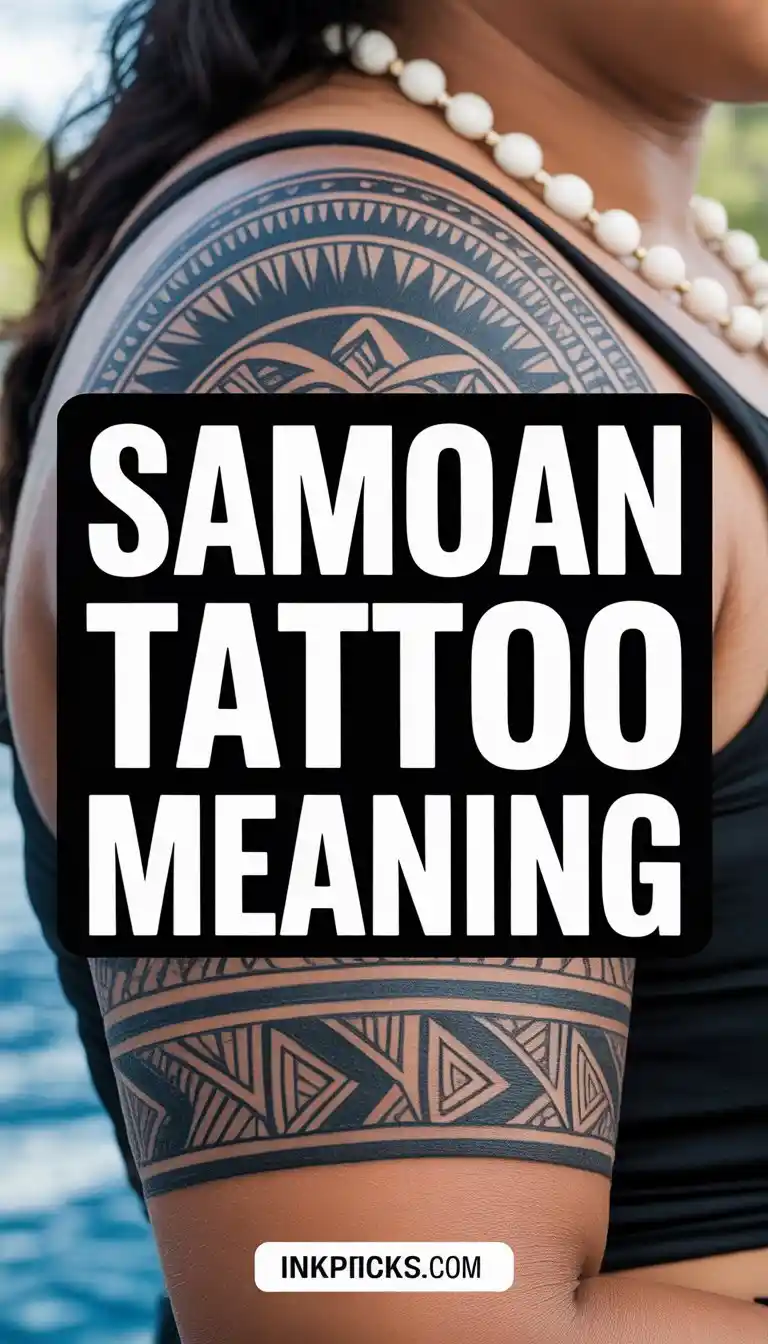
Every swirl, every line, every pattern in a Samoan tattoo tells a part of a story. They are not random. Each motif has a specific meaning, often relating to nature, family, or spiritual beliefs. It is like a secret language etched onto your skin.
Artists combine different symbols to create a unique narrative for each person. No two tattoos are exactly the same, which is pretty cool. It is a custom piece, just for you.
Key Symbols You Might See
Let us look at some popular symbols and what they represent. Understanding these adds so much depth to appreciating the artwork. It is not just lines; it connects to your lineage and island heritage.
- Enata (Human Figures): These represent people and life experiences. They can show family, ancestors, or even positions of status within the community. Sometimes they show a warrior returning, or a family growing bigger.
- Spearheads: These stand for bravery, warrior spirit, and fierceness. You see them often in male tattoos. It is a symbol of protection, someone who defends their people.
- Ocean/Waves: The ocean is a massive part of island life, naturally. Waves symbolize change, transition, and life itself. They also represent the journey of life, and the vastness of the Pacific.
- Shark Teeth (Niho Mano): Sharks are powerful creatures. Their teeth represent protection, guidance, and ferocity. Often, they protect you from dangers. It is good luck for travelers, too.
- Turtle Shells (Fonuea): Turtles symbolize longevity, well-being, and fertility. They also represent the family and harmony. A turtle is an ancient symbol.
- Sun: The sun represents richness, leadership, and greatness. It gives life and warmth. It is a symbol of hope and new beginnings.
- Lizard (Moko): Lizards are considered spiritual creatures. They represent good fortune and provide protection from evil spirits. They are often seen as messengers between the human world and the spirit world.
The Significance of Placement
Where you place a tattoo on your body also holds meaning. A tattoo on a certain limb might represent a different aspect of your life or an achievement.
For men, the pe’a takes up a lot of real estate, covering their lower body entirely. For women, the malu typically adorns the thighs, sometimes extending to the hands. These placements are not random. They follow strict traditional rules.
Consider the placement carefully if you get one. It adds another layer of meaning. It is not like choosing a random spot. For the ancestors, every inch on the body held some significance.
The Modern Samoan Tattoo: Respecting Tradition in a New Era
Today, Samoan tattooing still thrives. Many artists use modern tattoo guns, but they still respect the traditional designs and meanings. People from all over the world appreciate the artistry and cultural depth.
You still see those incredible designs, sometimes just as parts of a larger piece, or even small ones on the arm or leg. The designs are so intricate, you cannot help but admire them.
Some people opt for the traditional hand-tapping method. It connects them more deeply to the ancestral practices. It is a much more intense experience, physically and spiritually. Not for the faint of heart, believe me.
Artists carefully learn the patterns and their meanings. They often study for years to understand the history and techniques. It is a huge responsibility to carry on such a powerful tradition. They honor the past while embracing the future.
Here is a quick look at the differences between traditional and modern methods:
| Feature | Traditional Hand-Tapping (Tatau) | Modern Machine Tattooing |
|---|---|---|
| Tools Used | Bone, shell, wood combs, mallet | Electric tattoo machine, needles |
| Pain Level | Generally higher, over a long period | Variable, usually less intense per session |
| Time taken | Can take weeks or months to complete | Typically measured in hours or multiple sessions |
| Cultural Ritual | Often a communal, spiritual event | More individual, but still respects tradition |
| Authenticity | Deeply connected to ancestral practices | Modern interpretation, often more accessible |
What to Consider Before Getting a Samoan Tattoo
So, you are thinking about it? That is exciting. But wait. Do not just walk into the first tattoo shop you see. Do your homework. Seriously. This is not like getting a little butterfly on your ankle. This is serious stuff.
First, find a reputable artist, one who specializes in Polynesian designs. Look at their portfolio. Make sure their work looks authentic. You do not want someone who just copies pictures from the internet. You want someone who understands the symbols deeply.
Second, think about the meaning. What story do you want your tattoo to tell? Talk to your artist about your heritage, your family, your goals. They can help you choose the right symbols. It is a collaboration, not just a service.
Third, understand the commitment. These tattoos are often large. They take time and money. They are also permanent. You will wear this art for the rest of your life. Do you like commitment? Good, because this is a big one.
Respectful Representation: A Must
If you are not of Samoan descent, you can still get a Samoan tattoo. Many people do. However, you should approach it with respect and understanding. It is about cultural appreciation, not appropriation. Learn about the culture. Understand the meanings behind the symbols. Show respect for the tradition. Do not just get it because it looks “cool.”
You can talk to a Samoan artist. They often want to share their culture. They will help you find a design that feels right for you. It is about honoring the art and the people who created it. You are buying into a rich cultural heritage, not just a design.
My Experience Getting My Own Tattoo: A Little Story
I remember when I got my first meaningful tattoo, not Samoan, but Polynesian inspired. I did not just pick a random design. I spent months researching. I talked to artists, looked at books, and really thought about what I wanted to represent.
I learned about the symbolism of the patterns, the way certain lines flowed from one to the next. I wanted it to tell a story about my journey, a very personal narrative etched onto my arm.
It was not just ink; it was a map of my experiences, my challenges, and my growth. It was a really neat experience, from the initial consultation to the final tap of the needle. I still love it every day.
The artist I chose was amazing. He asked me questions about my family, my struggles, where I saw myself going. He helped me find symbols that resonated with my life. He created a piece that truly felt like me.
It was not just a transaction; it was a partnership in creating a personal narrative. I highly recommend taking that time. It truly makes a difference.
Frequently Asked Questions (FAQ)
What is the main difference between traditional tatau and modern Samoan tattoos?
Traditional tatau uses hand-tapping tools made from natural materials and can take weeks to complete, often as a ceremonial event. Modern Samoan tattoos typically use electric machines and are done in a shorter timeframe, although still respecting traditional designs and meanings.
Can anyone get a Samoan tattoo, or is it reserved for Samoan people?
Anyone can get a Samoan tattoo, but it is important to approach it with deep respect and understanding of the culture and its meanings. Non-Samoans should research thoroughly and work with an artist knowledgeable in Polynesian symbols to ensure cultural appreciation, not appropriation.
How do I choose the right symbols for my Samoan tattoo?
You should consult with an experienced artist who specializes in Polynesian designs. Discuss your personal story, family background, and values. The artist can then help you select and combine symbols that authentically represent your desired narrative and connect to the traditional meanings.